
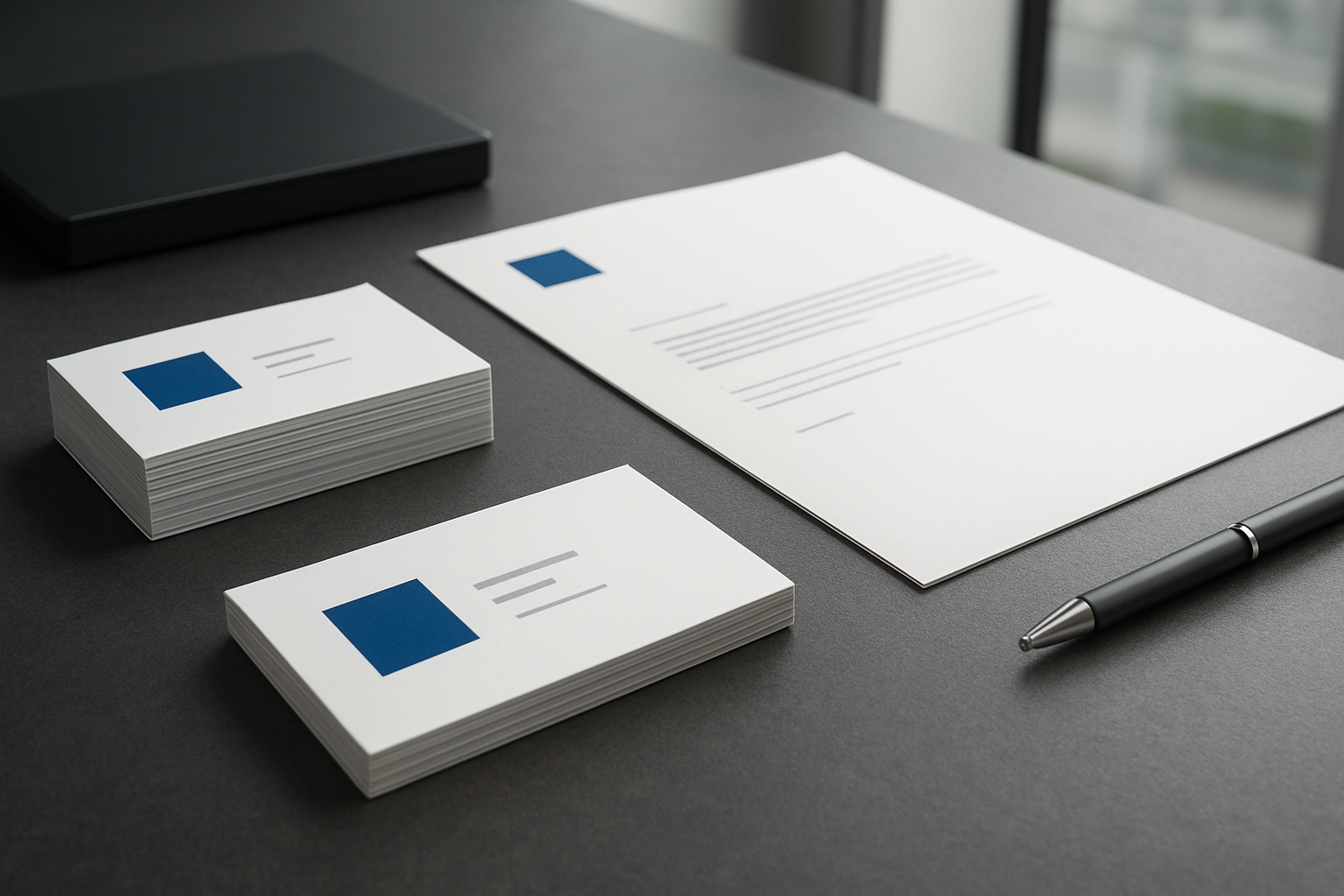
Every brand tells a story—and the most compelling stories are told consistently. From the first interaction a customer has with a business to every touchpoint that follows, visual consistency shapes perception, builds recognition, and earns trust. For businesses serious about their identity, professional printing is not a luxury; it is a foundational investment. The role that Custom Printing Services play in establishing and reinforcing a brand identity is one that deserves closer examination, particularly as more businesses compete for attention in crowded markets.
Why Does Brand Consistency Matter in Printed Materials?
Brand consistency is the practice of presenting a unified image across all communications and materials. When a customer sees the same logo, color palette, typography, and tone repeated across business cards, brochures, packaging, and signage, familiarity builds over time. Familiarity breeds trust.
Printed materials are often the most tangible expression of a brand. They can be touched, carried, and displayed in a way that digital content cannot. A business card handed over at a networking event, a beautifully designed package arriving at a customer’s door, or a bold banner at a trade show—these physical touchpoints make a brand real. Inconsistency in these materials, however subtle, can erode the professional image a business works hard to establish.
What Printed Materials Are Most Important for Brand Building?
While the specific needs vary by industry and business size, certain printed materials consistently prove their value across categories. Business cards remain one of the most effective networking tools available. Brochures and catalogues communicate depth, expertise, and range. Packaging transforms a product into an experience. Branded stationery—letterheads, envelopes, notepads—signals professionalism in every correspondence.
Event materials such as banners, displays, and branded merchandise extend a brand’s reach into physical spaces where potential customers gather. Each of these materials represents an opportunity to reinforce a brand’s visual identity and communicate its values. When every piece is thoughtfully designed and professionally produced, the cumulative effect is a brand that feels cohesive, credible, and memorable.
How Does Typography Influence the Perception of Printed Materials?
Typography is one of the most underappreciated elements of print design. The choice of typeface communicates personality before a single word is read. Serif fonts convey tradition and authority. Sans-serif fonts suggest modernity and clarity. Script fonts evoke elegance or creativity. Display fonts make bold statements.
In professional printing, typography must also be optimized for legibility at different sizes and across different materials. A font that reads beautifully on a screen may not translate well to a small label or a large-format banner. Professional print providers understand these nuances and can advise on font selection, sizing, and spacing to ensure that printed pieces are both visually appealing and easy to read.
What Finishing Options Elevate the Quality of Custom Print Products?
The finishing touches applied to a printed piece are often what transform it from standard to extraordinary. Finishing options include lamination, spot UV coating, foil stamping, embossing, debossing, and die-cutting. Each technique adds a tactile or visual dimension that standard printing cannot achieve.
Spot UV coating, for example, applies a high-gloss finish to specific areas of a printed piece—such as a logo or headline—while leaving the rest with a matte appearance. The contrast creates visual interest and draws attention to key design elements. Foil stamping adds a metallic sheen that communicates luxury and exclusivity. Embossing raises elements of the design to create a three-dimensional effect. These techniques are available across a wide range of products, from business cards and packaging to book covers and invitations.
How Can Custom Printing Improve Customer Experience?
The customer experience extends beyond the product or service itself. Packaging, invoices, thank-you cards, and even tissue paper inside a box are all part of the experience a customer has with a brand. When these elements are designed with care and produced to a high standard, they contribute to a sense of value that encourages loyalty and word-of-mouth recommendation.
Unboxing, in particular, has become a culturally significant moment for product-based businesses. Customers share unboxing experiences on social media, effectively turning custom packaging into organic marketing content. A beautifully designed box with branded tissue paper, a custom sticker, and a personalized card creates a moment worth sharing—and that kind of authentic engagement is difficult to achieve through paid advertising alone.
What Are the Benefits of Using a Single Print Partner for All Materials?
Working with a single, full-service printing partner offers significant advantages over sourcing different materials from different providers. Consistency is the primary benefit. When all materials are produced by the same provider using the same equipment, color calibration, and materials, the result is a cohesive suite of brand assets that genuinely look like they belong together.
A consolidated printing relationship also simplifies the ordering and reordering process. There is one point of contact, one set of approved files on record, and one established workflow. Over time, this efficiency saves both time and effort. A trusted printing partner also becomes familiar with a brand’s preferences and standards, which reduces the need for extensive briefing with every new project.
How Is Digital Printing Changing the Landscape of Custom Print?
Digital printing technology has advanced dramatically in recent years. Modern digital presses deliver print quality that rivals traditional offset printing, with the added advantage of shorter production runs and faster turnaround times. This has made high-quality custom printing more accessible to businesses that do not need large quantities of each material.
Variable data printing is one of the most significant innovations enabled by digital printing. It allows individual elements—names, addresses, images, or offers—to be customized across a large print run without slowing production. This capability is particularly valuable for direct mail campaigns, personalized packaging, and event materials where individual customization adds meaningful impact.
Investing in Print as a Long-Term Brand Asset
Custom printing is not a one-time expense—it is an ongoing investment in a brand’s ability to communicate clearly and professionally. The businesses that treat their printed materials with the same strategic attention they give to their digital presence are the ones that build the strongest, most recognizable brands over time.
Every printed piece that goes out into the world is a reflection of the business behind it. When that reflection is sharp, consistent, and well-crafted, it does the work of building trust and recognition without any additional effort. The impression made by a beautifully produced business card, a thoughtfully designed brochure, or a distinctive piece of packaging lasts far longer than the moment of first contact—and that lasting impression is precisely what great custom printing is designed to create.